
|
|
|
Keynotes
Our keynotes speakers
|
|
Timothy J. ClearyProfessor and Chair of the Department of School Psychology at the Graduate School of Applied and Professional Psychology (GSAPP) at Rutgers University (USA) One Size Doesn’t Fit All: Aligning SRL Assessments With Situational and School-Based RealitiesThis keynote examines the historical evolution of self-regulated learning (SRL) assessment practices, tracing foundational models, technological advances, and the increasing demand for multi-dimensional approaches that capture the dynamic and situational nature of SRL processes. A central focus of the address is uncovering the real-time challenges that practitioners and educators encounter when implementing SRL assessments in authentic school contexts. These barriers will be systematically explored, addressing issues spanning insufficient expertise and assessment literacy, feasibility and resource constraints, contextual variability, and difficulties integrating SRL assessment within existing professional systems and structure. A conceptual framework, paired with emerging solutions to promote more scalable, sustainable, and context-responsive practices, will be presented. A related theme centers on SRL microanalysis, a situation-specific interview and event-based methodology, and its applications across diverse contexts, learning activities, and performance domains. The conceptual and empirical discussion emphasized in this talk will be grounded in applied, school-based settings, offering actionable insights for researchers and educators seeking to implement SRL assessments effectively. Attendees will leave with concrete strategies for bridging research and practice, strengthening SRL assessment literacy, and empowering autonomy and self-directed learning in today’s classrooms. |
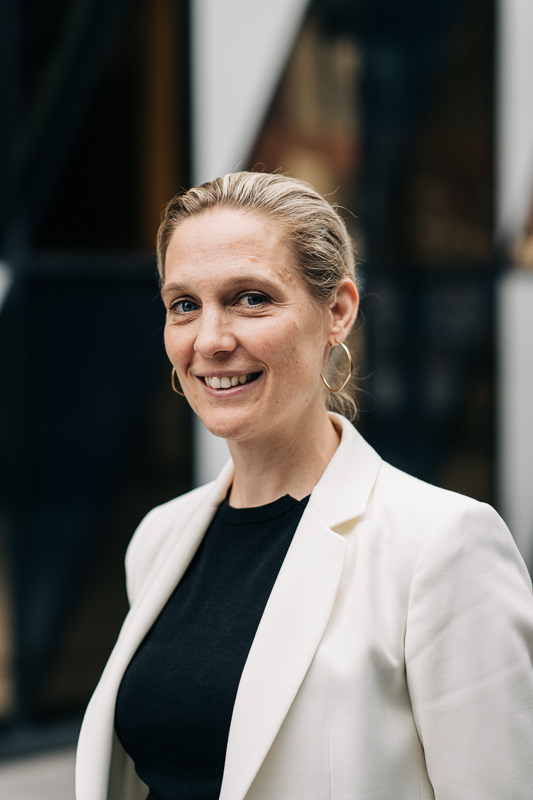 |
Anique B. H. de BruinProfessor of Self-Regulation in Higher Education at the School of Health Professions Education at Maastricht University (The Netherlands) The Dynamics of Struggle: Self-regulating Learning in the Face of Desirable DifficultiesDurable learning does not come easy. It emerges when learners engage with desirable difficulties, i.e., learning conditions that slow performance in the short term but strengthen understanding and retention in the long run. Yet learners naturally gravitate toward fluent, effortless study experiences, creating a central paradox for education: the conditions that feel productive are often not those that promote lasting learning. Understanding how learners regulate their engagement with desirable difficulty has therefore become a key challenge for both research and practice. This keynote will examine recent empirical and theoretical developments in the self-regulation of learners’ willingness to engage with desirable difficulties. Drawing on work from cognitive psychology and educational science, my talk will discuss how learners make moment-to-moment judgments about learning, effort, and learning strategies, and why these judgments frequently favor short-term comfort over long-term learning benefits. Particular attention will be given to interventions that aim to support more effective self-regulation of learning, including the development of the Study Smart learning strategy program and the Start and Stick to Desirable Difficulties (S2D2) framework. I will also address the methodological challenges that this type of research brings, and that permeate self-regulated learning research more generally, including recent work in our group that employs experience sampling methods (ESM). These approaches open new possibilities for linking theoretical models of self-regulation with the dynamic realities of students’ everyday learning. Together, these lines of work point toward a broader vision: higher education should not merely deliver knowledge, but should equip learners with the skills and confidence to deliberately seek out and manage desirable difficulties throughout their academic and professional lives. |
 |
Philip H. WinneProfessor Emeritus of Educational Psychology at Simon Fraser University (Canada) Conceptualizing Self-Regulated Learning as Conditional and Sequential Decision MakingOne goal of research on SRL is to identify how learners can be supported to understand, develop and execute increasingly productive SRL. In this multifaceted problem space, I focus on two relatively under-explored factors. (1) SRL involves making decisions about what to learn and how to learn. Given conditions at a point in a learning task, is learning concept X important? Does a particular learning tactic (or strategy) have sufficient utility to merit applying it? Does another tactic have greater utility? Research on decision making has been somewhat overlooked in modeling SRL and theorizing why SRL fails, stumbles and recovers, or succeeds. (2) Models of metacognition distinguish two broad classes of knowledge: conditional and procedural. Conditional knowledge is a major component of the launchpad for SRL and the filter for transfer of SRL. Also, improving SRL may rely heavily on refining conditional knowledge. However, research has mainly focused on procedural knowledge while underplaying conditional knowledge. I examine roles for decision making and conditional knowledge in conceptualizing SRL, develop links between them, and sketch future research to leverage their merger. |